”Anything that has a recycling mark can go directly in the recycling bin.” This is what many people believe. Practically, it is not true. That mark frequently signifies the kind of material, rather than whether it will be taken by your local plant.
Take the example of soft plastics such as snack packages. They might contain symbols. But they are often not included in curbside recycling programs.
Failure to understand packaging and materials results in contamination. This can cause whole loads of recycling material to be rejected.
Here are some items you should never throw in the reusable bin.
Food-soiled cardboard
Cardboard contains the recycling symbol. It can be easily recycled. But only when clean.
In some cases, the fibers are contaminated by:
- Grease
- Cheese
- Food residues.
A good example is greasy pizza boxes. The dirt makes them unsuitable for normal recycling.
In some cases, only a part of the box is dirty. In that case, tear off the clean sections. These can be recycled. The contaminated portion should go into the general waste.
Plastic knives and straws
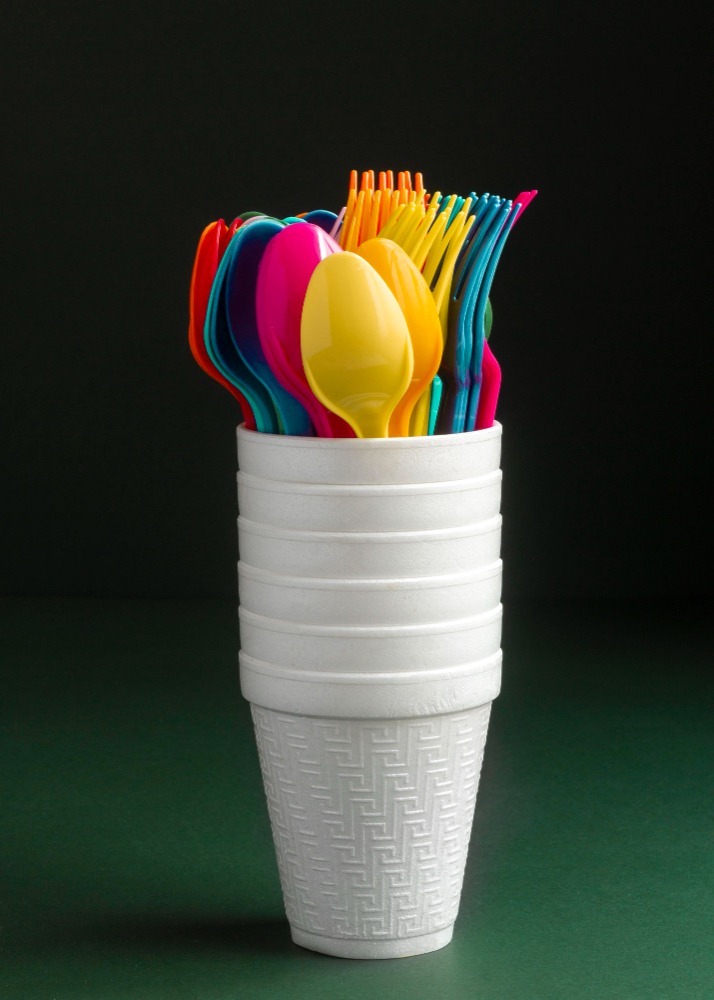
These items are usually composed of low-grade plastics. These cannot be economically recycled. They are also not very big. Hence, they are hard to sort at recycling plants. They can easily fall through machinery operations.
Although they may look like recyclable plastics, they typically belong to general waste. Reusable options are more viable. They help to minimize long-term waste.
Coffee cups and lids
Takeaway coffee cups resemble paper. But they are lined with an invisible layer of plastic. This is what prevents leakages. This means they are constructed with a combination of materials. It makes them hard to recycle through conventional mechanisms.
Some locations may accept plastic lids. But cups are usually not recyclable. They are not to be placed in your recycling bin. Unless your local authority specifically accepts them.
Black plastic food trays
Ready-made meals and meat packaging are usually packed in black plastic trays. They are hardly recyclable.
Sorting facilities use optical scanners that cannot detect black plastic. Therefore, these items are usually diverted to a landfill.
Switch to clear plastics where possible. This will increase your household recycling rate.
Foil and aluminum with food residue
Aluminum can be recycled. But only when clean. Greasy foil or trays cannot be processed effectively.
You can rinse off any residue. This can help. But if the contamination is extreme, discard it in the general waste.
Glassware and ceramics
Not all glass is reusable. You should separate objects such as:
- Drinking glasses
- Ovenware
- Ceramics.
These do not melt at the same temperature as some ordinary glass bottles and jars.
Combining them with recyclable glass may interfere with the recycling process. It can even break equipment. These should be discarded in specific waste streams. Also, consider donating them if they are still usable.
Summing up
The process of recycling in the kitchen involves more than identifying the material. It also requires consideration of the:
- Condition
- Composition
- Local regulations.
Eliminate the above items from your recycling bin. This way, you lower the contamination rate. Also, always check local guidelines.